If I Should Fall Behind
Verse 1
We said we'd walk together, baby, come what mayThat come the twilight, should we lose our wayIf as we're walking a hand should slip freeI'll wait for you, and should I fall behind, wait for meVerse 2
We swore we'd travel, darlin', side by sideWe'd help each other stay in strideBut each lover's steps fall so differentlyBut I'll wait for you, and if I should fall behind, wait for meBridge
Now, everyone dreams of a love lasting and trueOh, but you and I know what this world can doSo let's make our steps clear that the other may seeAnd I'll wait for you, and if I should fall behind, wait for meVerse 3
Now, there's a beautiful river in the valley aheadThere, 'neath the oak's bough, soon, we will be wedShould we lose each other in the shadow of the evening treesI'll wait for you, and should I fall behind, wait for meChorus
Darlin', I'll wait for you, and should I fall behind, wait for meYeah, I'll wait for you, and should I fall behind, wait for meI'll wait for you, and should I fall behind, wait for meI'll wait for youWhat the song means
This song is a promise between two lovers who plan to walk through life together, with a wedding in sight. Its central fear is separation: a hand slipping free, the dark arriving at dusk, or the simple fact that people move at different speeds. The speaker's answer is a conditional vow. If one of them falls behind, the other will wait.
The story moves from hopeful declaration to something more sober. The early verses recall oaths and shared travel, but the bridge admits that everyone dreams of a lasting love while the world has ways of pulling couples apart, so the lovers must make their steps clear to each other. The third verse looks ahead to a river valley and a wedding under an oak, a bright, pastoral picture, yet the evening trees bring shadow back in. The mood shifts from certainty to tender reassurance, and the chorus repeats the vow until it feels almost like a prayer.
The key images carry the meaning. Walking stands for a shared life, and twilight and evening suggest the hard or closing years. The river and oak describe a peaceful future that is still uncertain. "Fall behind" is the song's core image, meaning to be left in the slower lane of life. The request to wait is an act of patience and devotion rather than a demand, and it means loyalty when one partner cannot keep pace.
Key phrases explained
- come what may
- whatever happens — An idiom meaning "no matter what difficulties come"; it sets the tone of the vow from the first line.
- stay in stride
- keep pace with each other — A walking metaphor for staying together and moving through life in step.
- 'neath the oak's bough
- under the branch of the oak tree — Poetic, old-fashioned phrasing that gives the wedding a romantic, pastoral setting.
- what this world can do
- what the world is capable of doing to people — A hint at hardship and outside forces that can separate couples, shifting the song from dream to realism.
- fall behind
- lag behind, be left behind — The song's central image: falling behind in life, and the request to be waited for.
Song info
- Release date
- 1992-12-15
- Album
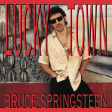
- Lucky Town
- Written by
- Bruce Springsteen
- Produced by
- Bruce Springsteen, Jon Landau, Chuck Plotkin
Add a translation in your language · Request another language